By Elicipha Njuguna
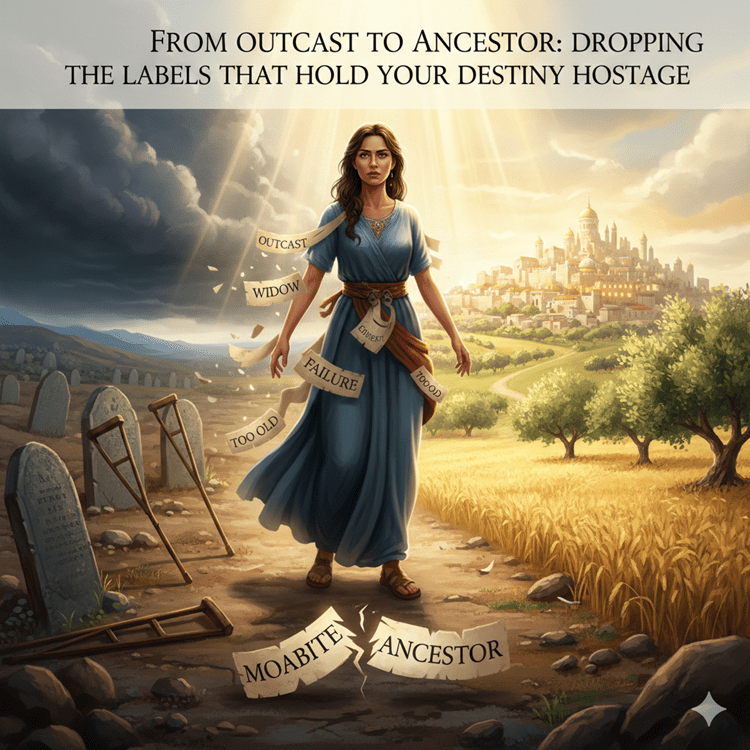
We all carry names. Some are given to us at birth, some are shaped by circumstance, and others we quietly accept over time. Too young, unqualified, broken, outsider. What begins as a description can slowly become a limitation, shaping how we see ourselves and what we believe is possible.
But what if there is a deeper story, one that challenges us to release those limiting identities and embrace something greater? What if our past does not define our future? To step into that truth, we must recognize the identities we need to leave behind so that God can rewrite our story of redemption.
The Weight of the Moabite Identity
Imagine being Ruth. By the standards of her time, she embodied everything society rejected.
First, she was a Moabite. This was not just a nationality, it carried deep stigma. The Moabites traced their origin to a troubling history, born out of incest between Lot and his eldest daughter. They were long regarded as enemies of Israel and were often excluded socially and spiritually.
Beyond her background, Ruth was a widow in a patriarchal society. She had no husband, no sons, and no security. She stood at the intersection of loss and exclusion, a foreigner, grieving, and vulnerable.
The Comfort of Familiar Identity
By all accounts, Ruth’s story could have ended in quiet obscurity. And here is where it becomes personal for us. Sometimes, we hold onto limiting identities because they become familiar.
There is a subtle comfort in seeing ourselves as the victim, the overlooked one, or the person who never gets a fair chance. These identities can attract sympathy or give us a reason not to try, not to risk, and not to grow. Over time, what began as pain becomes something we lean on. As heavy as it is, it can feel safer than stepping into the unknown.
Ruth could have remained in Moab, anchored in her grief and her outsider status. She could have settled into the belief that this was all her life would ever be. But she did not. She chose to release what was familiar and step into something uncertain but purposeful.
The Mirror: How we see others
While we wrestle with the identities we carry, there is another truth we must confront. Often, we are the ones assigning limiting narratives to others.
How many people have we quietly defined by their past mistakes, their family background, or their present struggles? We reduce them to a single story and relate to them through that lens. In doing so, we confine them to a version of themselves that God is trying to transform.
When we define others in this way, we act as though their story is already finished. Yet God is still at work. To walk in the path of redemption, we must release the tendency to confine people and begin to see them through the lens of possibility.
From Identity to Legacy
Ruth made a courageous decision. She let go of the identities that could have defined her, and Boaz chose not to define her by them either. Where others might have seen an outsider, he recognized character and dignity.
Because they both looked beyond surface identity, God wrote a story far greater than anyone could have imagined. Ruth, once excluded, became the great grandmother of King David and part of the lineage of Jesus Christ.
Her story did not end with where she came from. It was transformed by the choices she made and the grace that met her along the way.
What are you Holding and Projecting?
The story of Ruth is more than history. It is a mirror. To experience the fullness of redemption, we must be willing to release the names that have shaped us and reconsider the ones we place on others.
Which of these are you being invited to let go of today?
- The identity tied to ancestry or background. Are you holding onto family history or past experiences that make you feel disqualified?
- The identity shaped by loss. Have you allowed experiences like grief, divorce, or failure to define your worth?
- The identity of limitation. Is there a part of you that remains in a place of brokenness because it feels safer than growth?
- The identity of judgment. Are you defining others in ways that prevent you from seeing who they are becoming?
Reflection:
- Which label has been the hardest for you to drop whether given to you by others, or one you gave yourself?
- How does the knowledge that Ruth (a Moabite) is in the lineage of Jesus change how you see your own disqualifying past?
- What is one practical step you can take this week to stop leaning on a label crutch?
Ruth let go of what defined her, Boaz chose to see who she truly was, and in that space, God wrote a legacy that still speaks today.
 Site Title
Leave a comment